Oct 30, 2026News & Insights
Lead-Acid Battery Manufacturing Process: 8 Steps From Plate to Pallet
A buyer's walk-through of the lead-acid battery production line: plate wrapping, cast-on-strap welding, sealing, acid filling, formation charging, and what to verify at each stage.
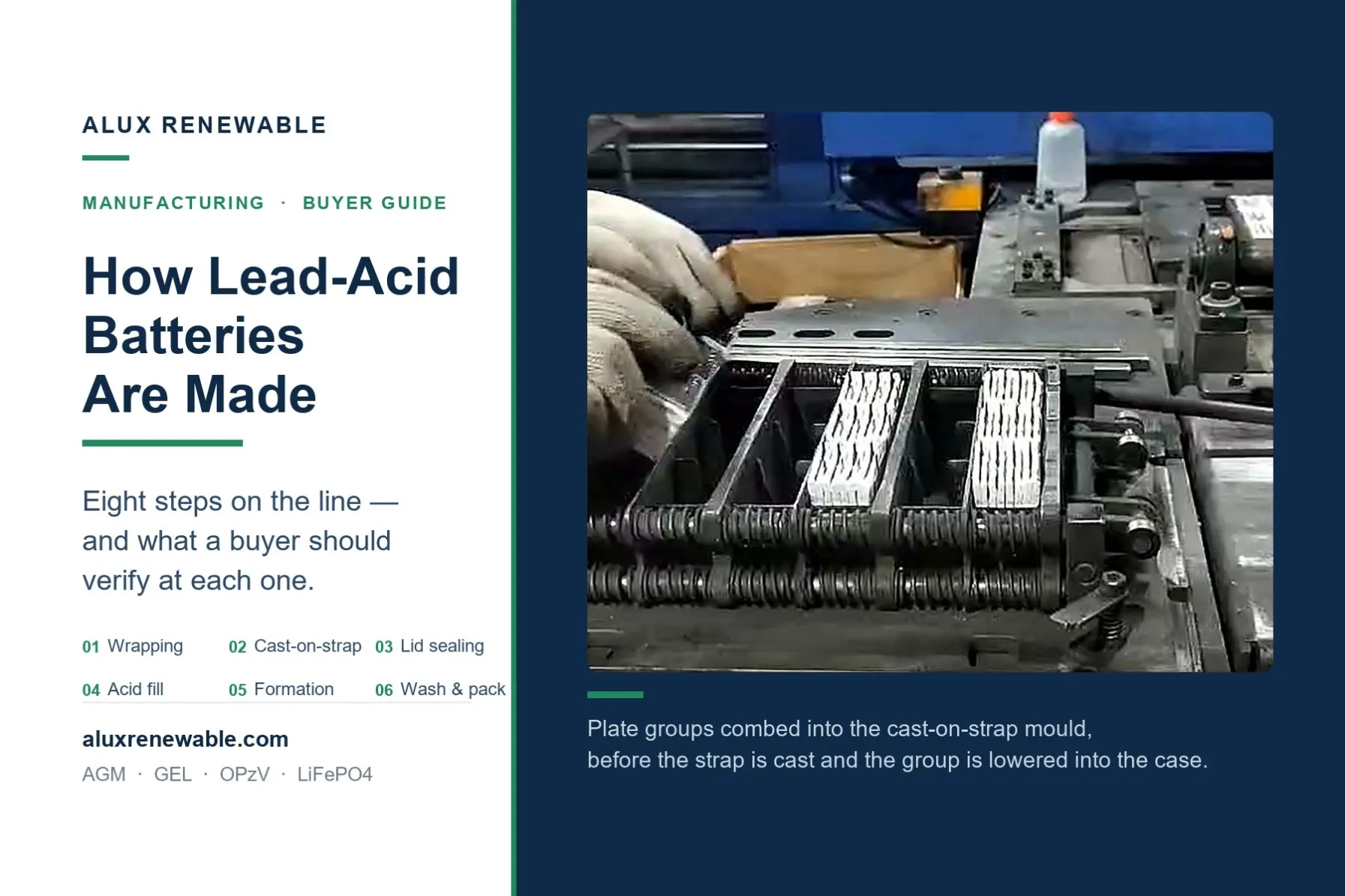
Why the production line matters to a battery buyer
Most importers evaluate a lead-acid supplier on price per amp-hour, datasheet numbers and delivery time. The production line rarely comes up in the first conversation, yet it decides all three. A cell that is wrapped by hand at the wrong tension, welded with a cold strap, or filled with electrolyte a few points off density will still pass a quick voltage check on the dock and fail in the field two summers later.
The walk-through below follows the actual sequence used on a lead-acid line: plate wrapping, cast-on-strap welding, lid and terminal sealing, metered electrolyte filling, formation charging, then washing, testing and packing. For each step there is a short note on what the operation does and what a buyer can reasonably ask to see.
The photos in this guide were taken on a lead-acid battery production line in China. They show the equipment and the manual operations around it, not a showroom.
Step 1 - Wrapping the plates into cell groups
Positive and negative plates arrive from the plate shop already formed and cured. The first assembly operation wraps each plate in a separator - a glass microfibre mat for AGM, or a ribbed envelope plus mat for gel - and stacks them into a cell group with the correct plate count and polarity.
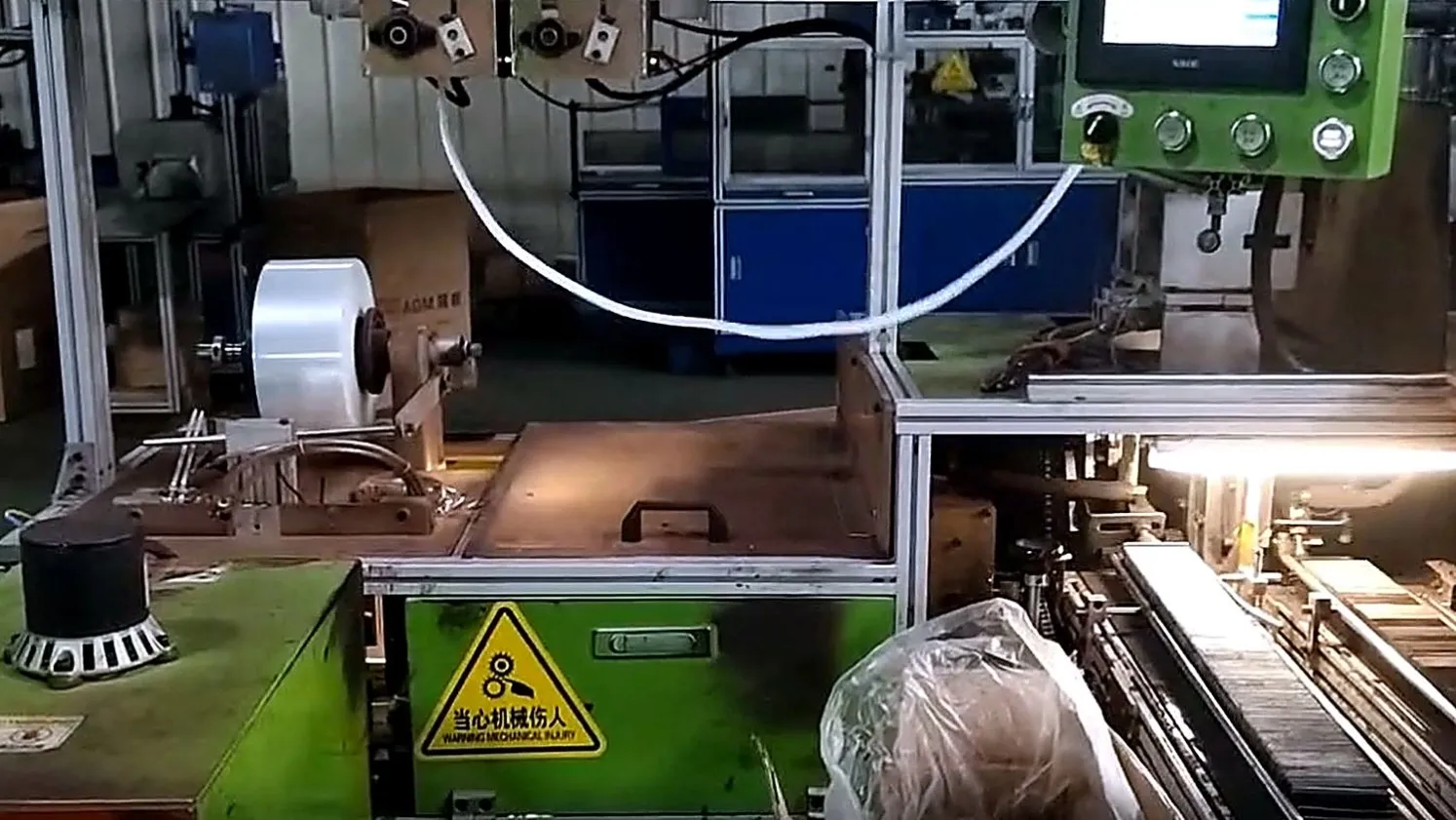
Plate enveloping: the separator roll feeds the wrapping station that encloses each plate before stacking.
This step sets two things that never change later: the plate count per cell, which fixes capacity, and the alignment of the plate stack, which decides whether the group fits the case without stressing the separator. A misaligned or over-compressed group is a short-circuit waiting to happen.
What to check
Ask whether wrapping is automatic or manual, and how the separator tension is controlled. Automatic lines hold a consistent envelope and reject mis-feeds; manual wrapping depends entirely on operator habit. Either can produce good batteries, but the inspection standard has to be written down, not assumed.
Step 2 - Cast-on-strap welding
The wrapped groups go into a cast-on-strap mould. Lugs are combed into the mould cavities, lead is poured or injected, and the strap that joins the lugs of one polarity is formed in a single shot. The group is then demoulded, lowered into the case, and the through-wall weld joins adjacent cells in series.
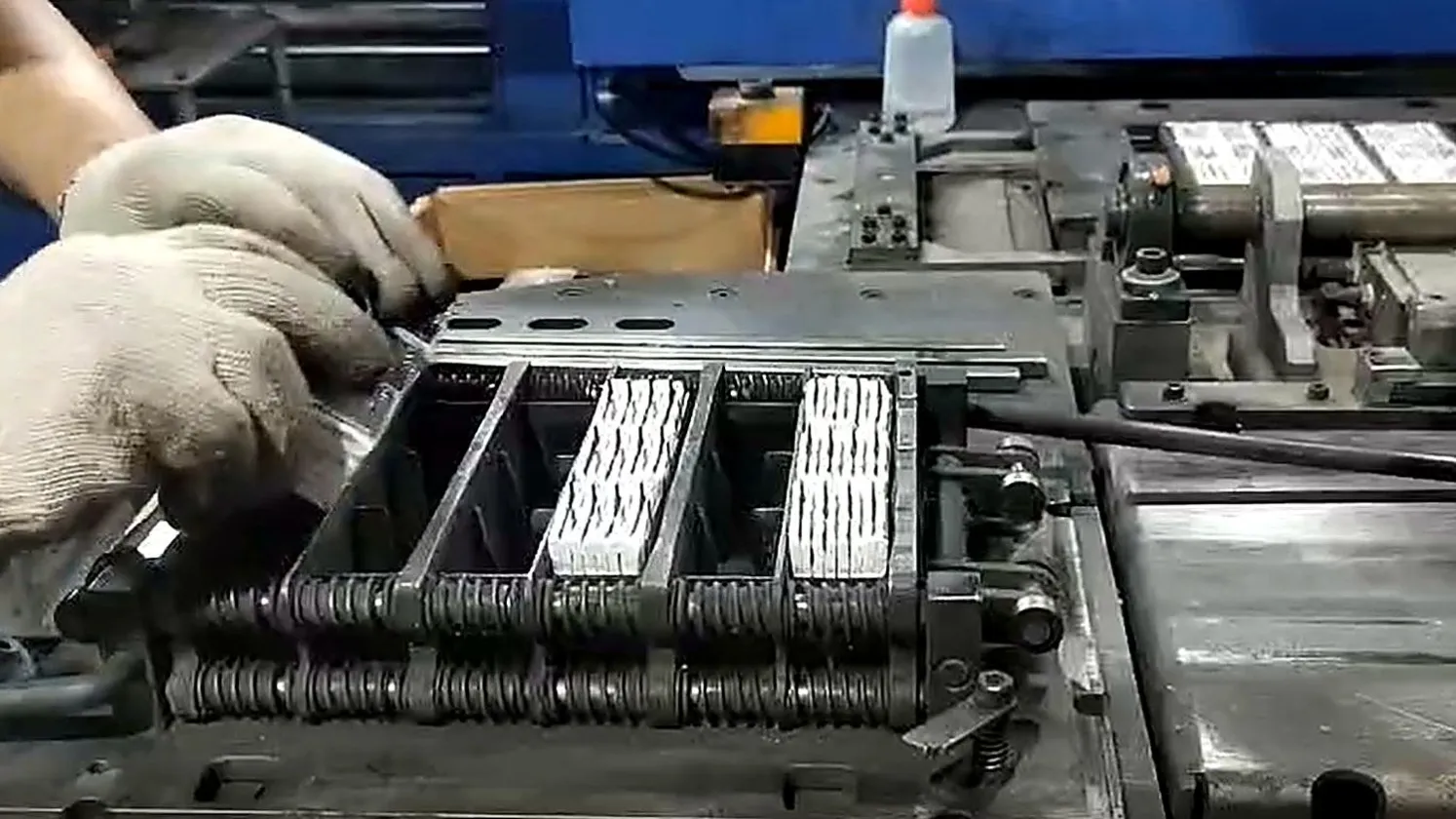
A plate group being lowered into the cast-on-strap mould, lugs combed over the cavities.
This is the highest-risk joint in the whole battery. Every amp the battery delivers passes through these straps. A cold shut, an oxide inclusion or a strap that is too thin raises internal resistance, and the battery starts to run hot under load long before its cycle life should end.
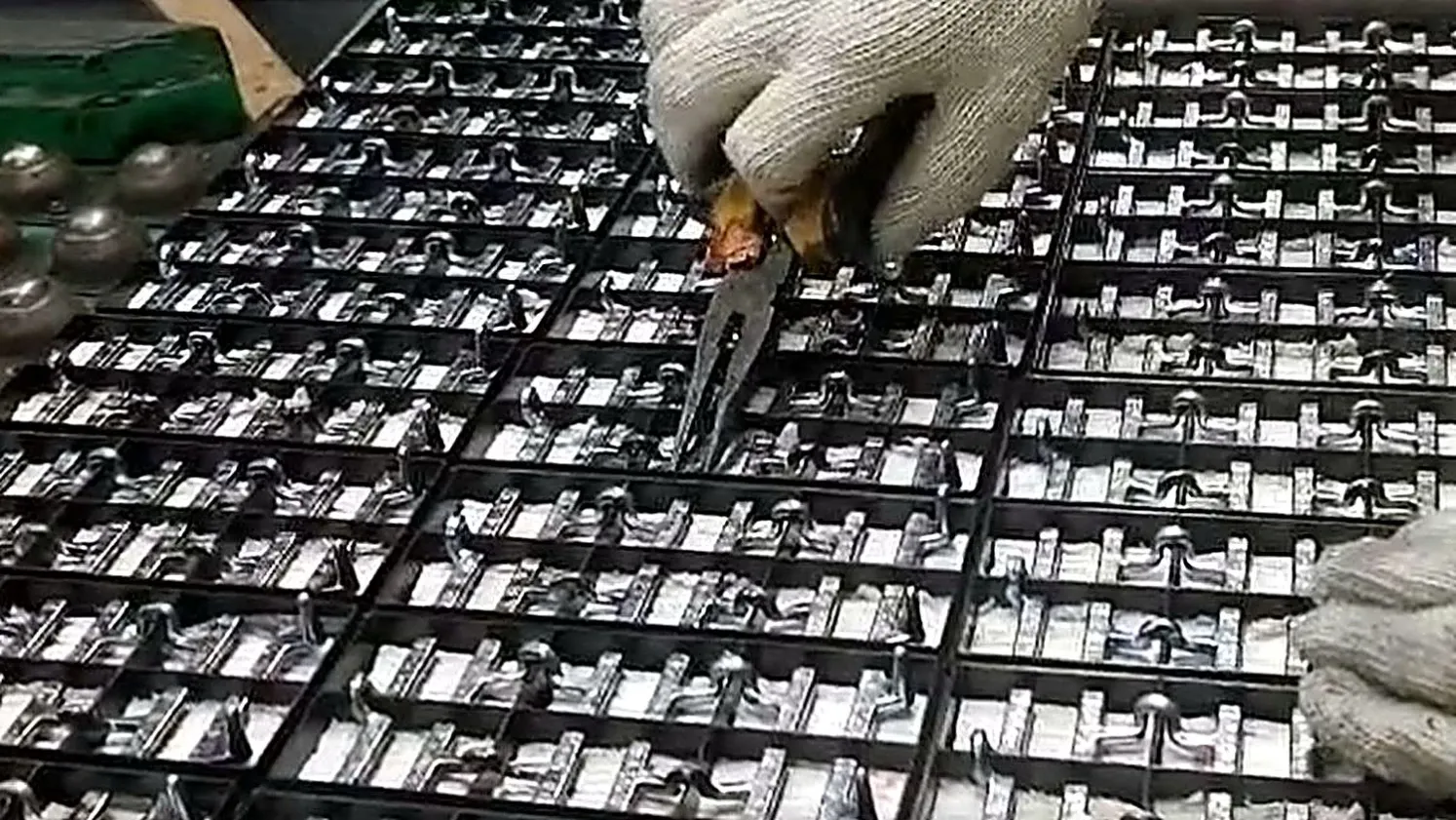
Hand burning of inter-cell joints on a row of groups, after the strap has been cast.
What to check
Ask for the strap thickness and the welding temperature window, and whether the line records them per shift. On a factory visit, look at the strap surface: a sound cast is smooth and fully filled, with no shrink cavity at the lug root. Automatic cast-on-strap machines give repeatability; manual casting gives flexibility for small runs. What matters is whether the process is measured at all.
Step 3 - Lid, terminals and sealing
After welding, the group sits in its case and the lid is bonded. The terminal bushings are welded through the lid, then the joint is sealed in two passes: a bottom seal around the terminal base and a coloured seal along the lid seam. The colour layer is not decoration - it is a visible witness that the seam was sealed, and a gap in the bead is a leak path for acid creep.
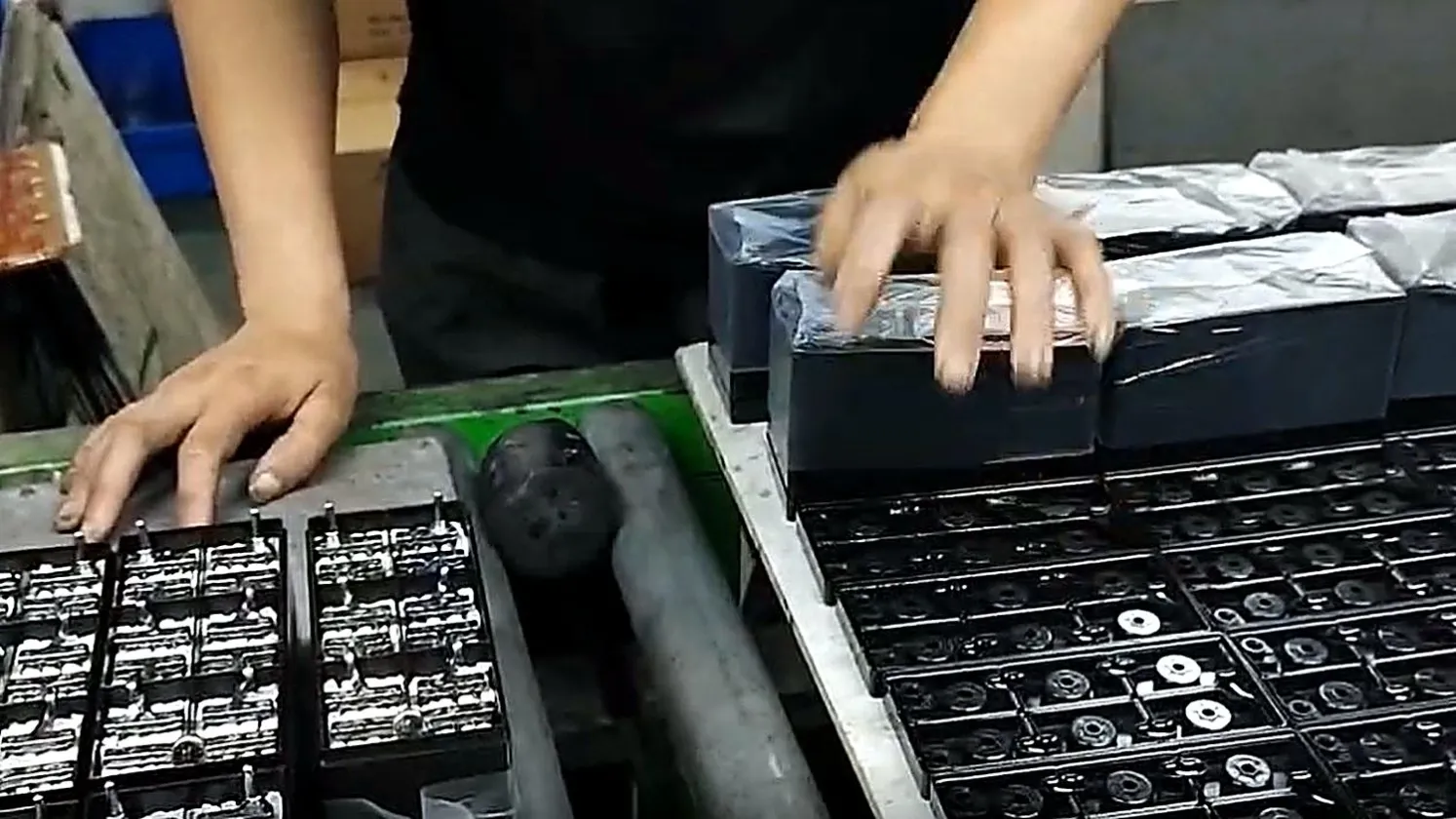
Cover fitting: lids going onto blocks before the terminal and seam seals.
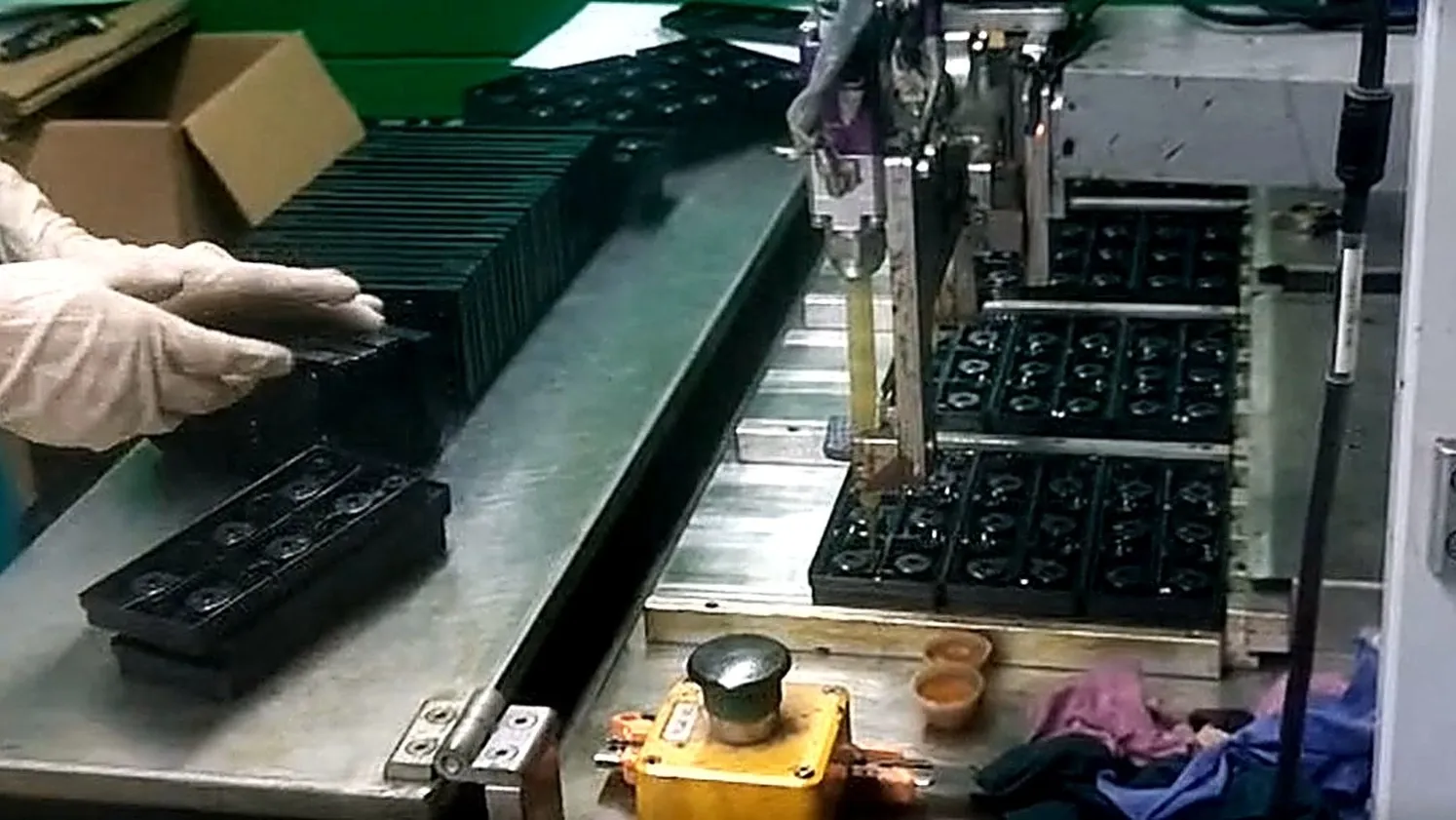
A block indexing into the terminal station on the sealing line.
What to check
Ask how terminal weld depth is verified - a pull test, a section cut, or a torque check on a sample - and how the sealant cure time is controlled before packing. Batteries packed warm, before the sealant has set, are a common cause of shipping leaks.
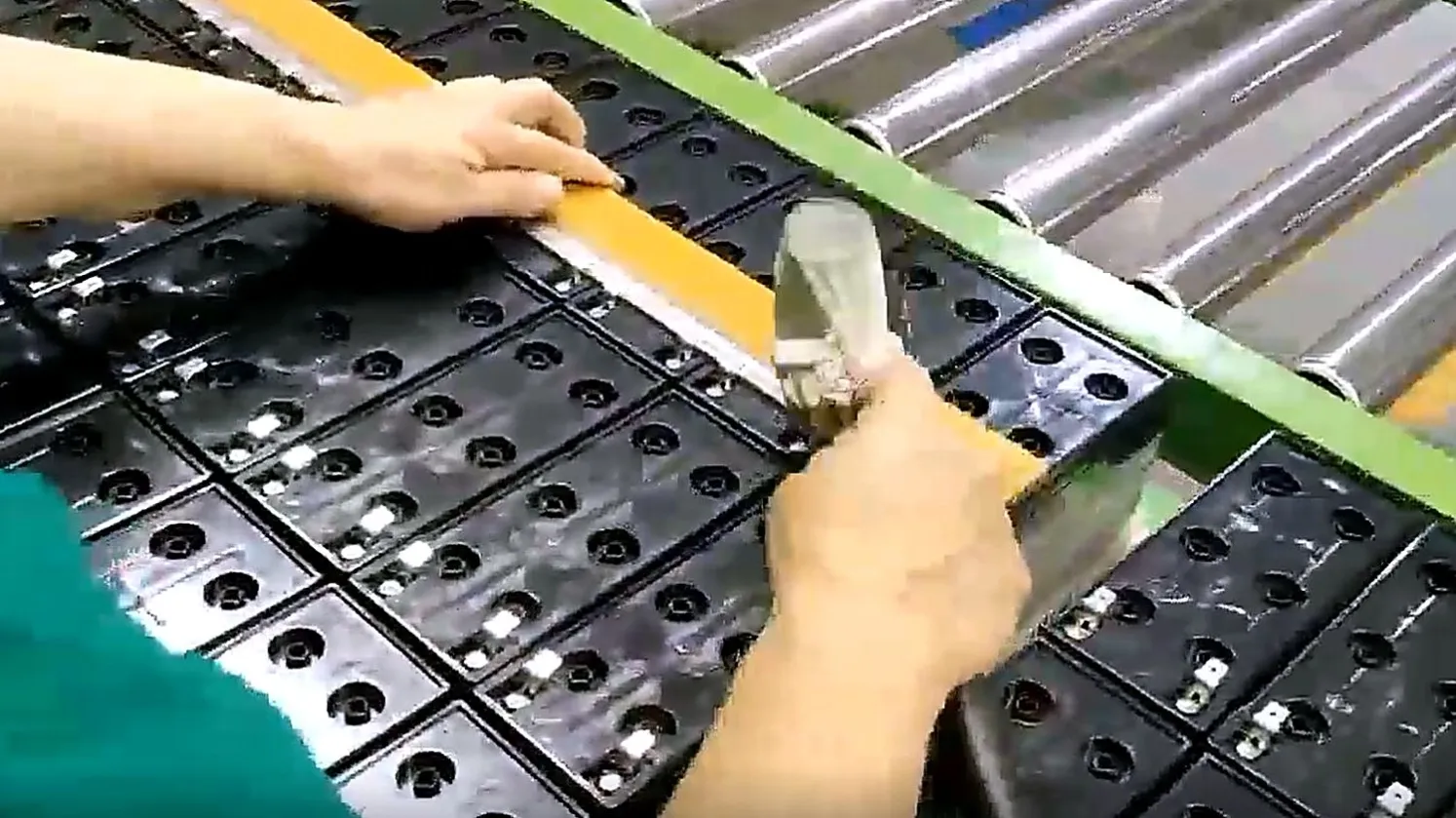
Sealant worked along the cover seam - the visible witness that the joint was sealed.
Step 4 - Metered electrolyte filling
Electrolyte is injected by a metered filling machine, one nozzle per cell, with the volume set per model. The fill is then checked - by weight on the line, or by an operator verifying levels cell by cell - before the battery moves on.
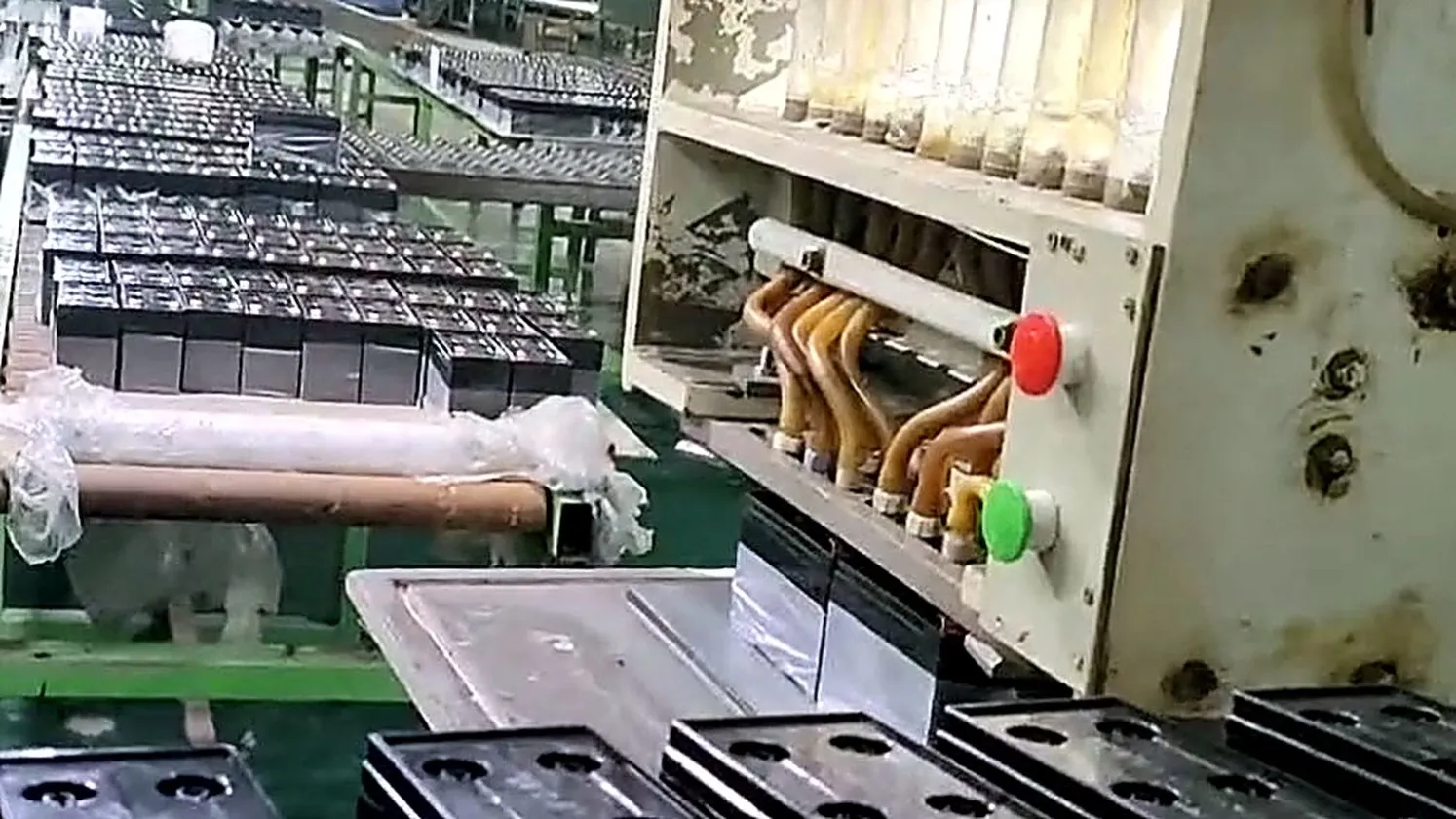
Acid supply manifold with sight tubes, feeding the metered filling station.
Filling accuracy is where cheap lines cut corners most quietly. Under-filling costs capacity and accelerates sulfation on the upper plate edges; over-filling pushes acid into the valve and raises the risk of leakage and corrosion. Acid density and temperature at the moment of filling also matter, because both shift the final state of charge after formation.
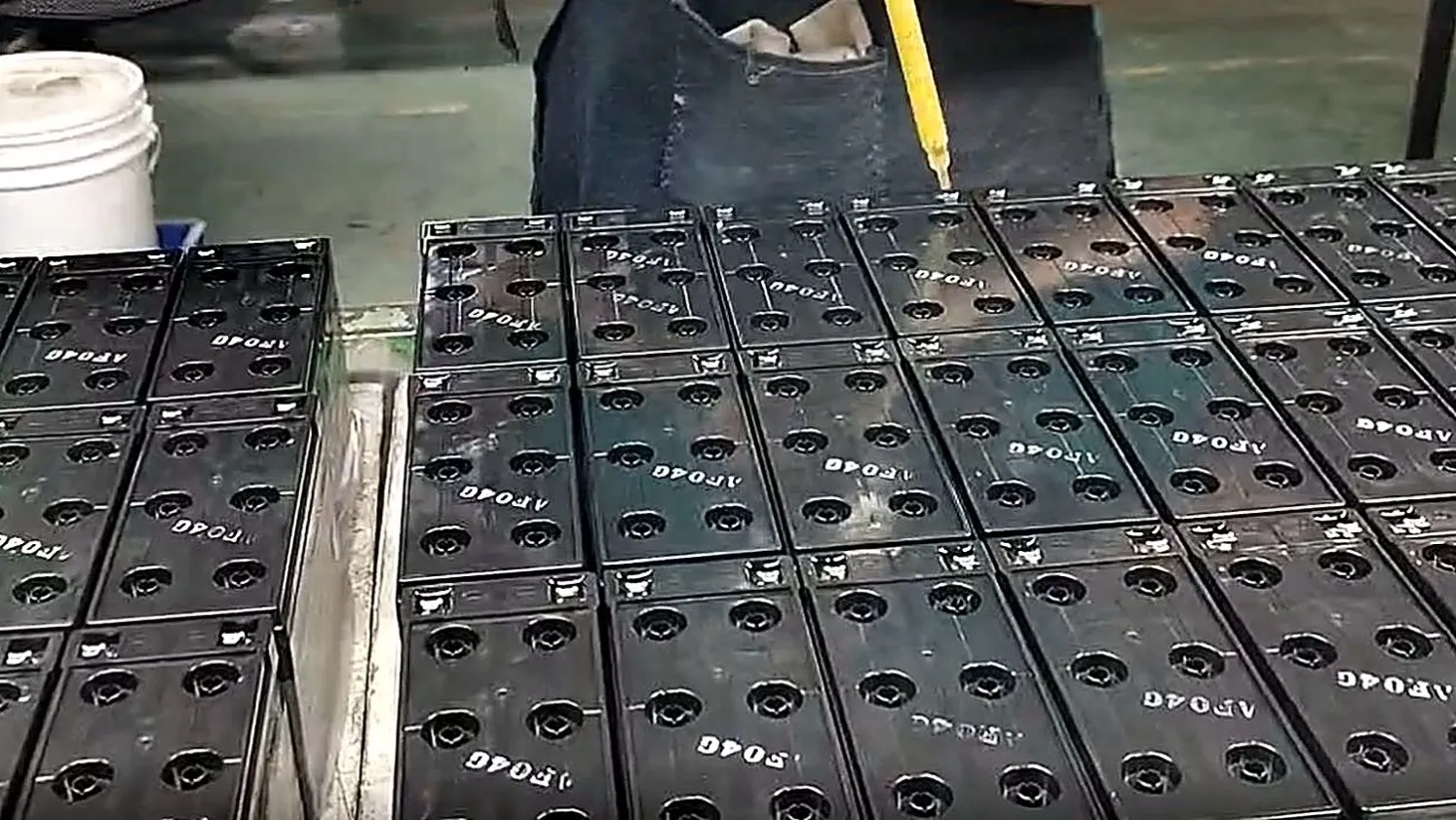
Blocks with vent caps fitted, queued for the next station.
What to check
Ask for the fill weight record per batch and the acid specification, including density tolerance. If a supplier cannot produce a fill record for the batch you are buying, the number on the datasheet is a design target rather than a measured result.
Step 5 - Formation charging
Formation is the first real charge the battery ever receives, and it converts the paste in the plates into active material. On a modern line the charge and discharge cycles are run by a computer-controlled formation system, with current, voltage, temperature and time held to a program for each model.
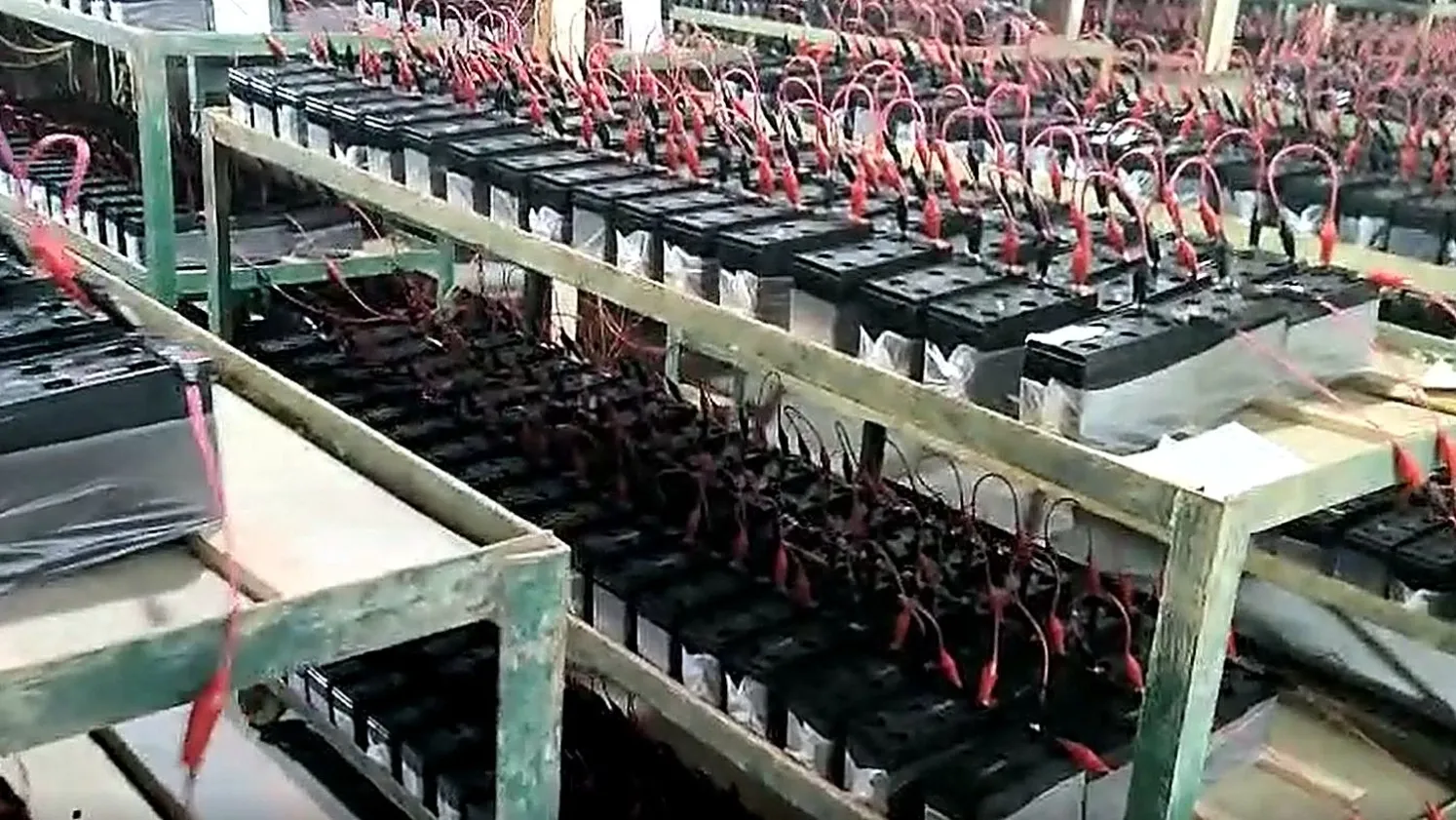
Formation racks: blocks wired in circuits under computer-controlled charge and discharge.
This step is slow - typically a day or more per batch - and it consumes a large share of the plant's electricity. That is one reason a genuinely formed battery cannot be made in a hurry, and one reason suspiciously cheap offers often turn out to be under-formed.
What to check
Ask for the formation profile and the batch record showing voltage and temperature against time. A supplier who can show formation curves per batch is running a controlled process. One who cannot is asking you to trust the label.
Step 6 - Washing, testing and packing
Formed batteries come off the line with acid residue on the case. They are washed in a multi-stage spray washer - the line we photographed uses a three-stage closed-loop system where the wash water is filtered and reused - then dried and tested.
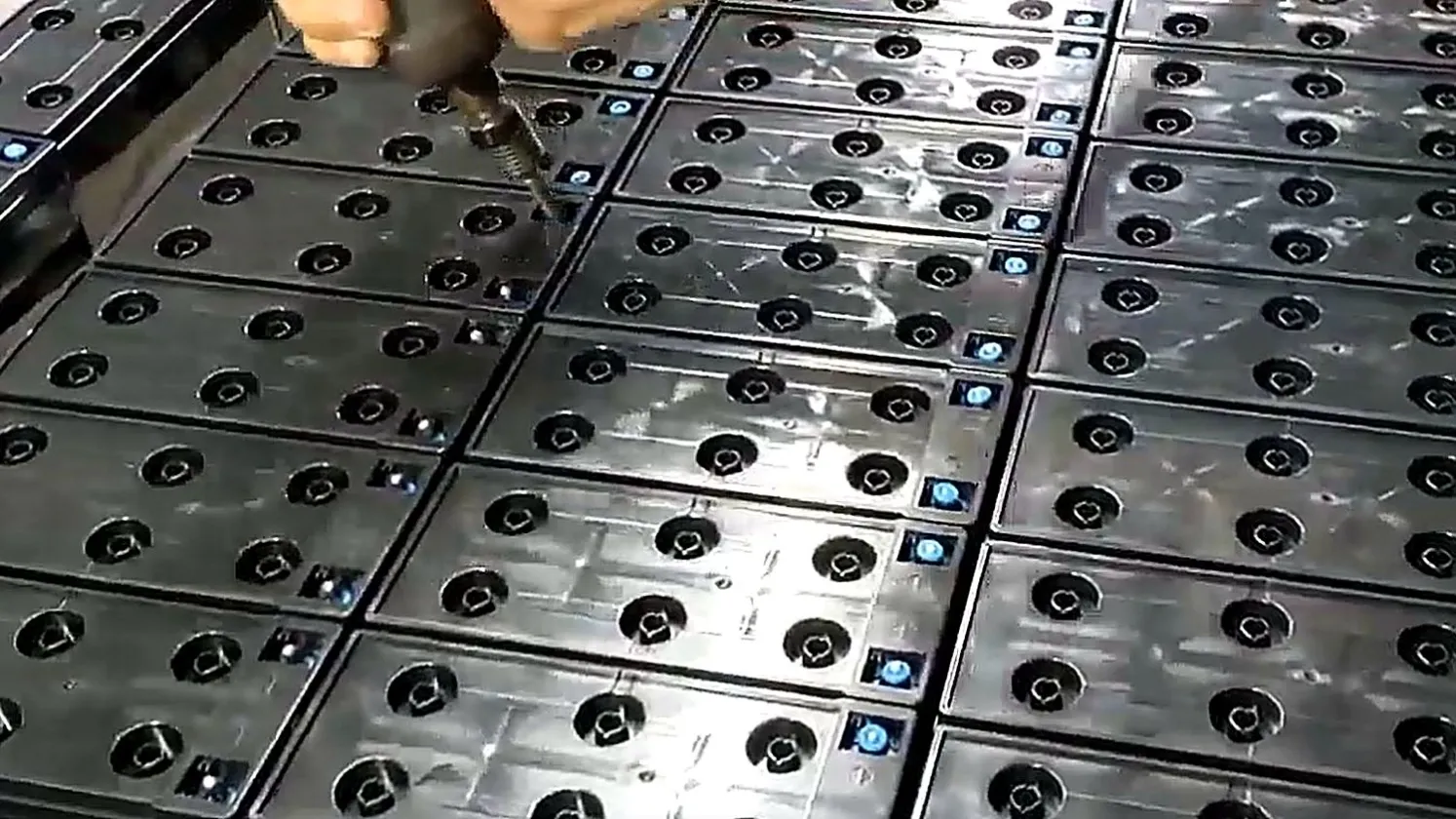
Blocks queued along the line between assembly stations.
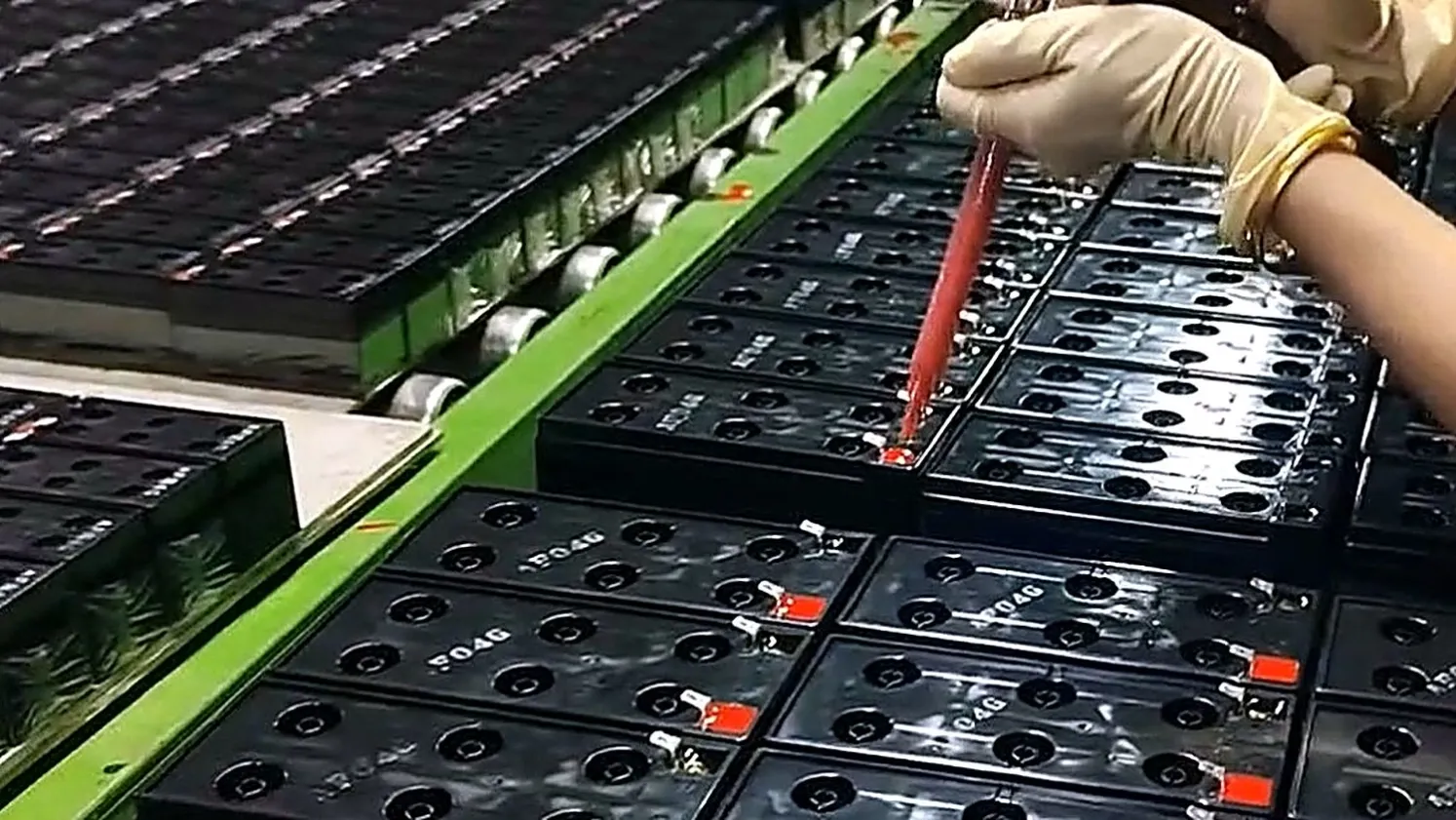
Valve caps being seated into the cover by hand.
Testing normally covers open-circuit voltage and, depending on the model, a capacity or high-rate discharge check on a sample. The faceplate is then ultrasonically welded, the case is screen-printed with the model and date code, and the battery is packed for shipment.
What to check
Ask what is tested on every unit and what is tested on a sample only, and how the date code is applied. A burnt-in or printed date code that does not match the formation record is a traceability break, and traceability is what you need when a claim comes back two years later.
What the line tells you about the price
Two suppliers can quote the same 12 V 200 Ah AGM block and be 20 percent apart. The difference is usually in how much of the above is measured rather than assumed: automatic wrapping versus manual, recorded strap thickness versus none, metered fill with a weight record versus a visual check, controlled formation versus a fixed timer.
None of that shows up in a datasheet. It shows up in your return rate eighteen months later, which is why a factory walk-through or a process audit is worth more than a third price comparison.
Questions worth asking before you place an order
Which steps are automatic and which are manual on your line? Do you keep strap thickness and welding temperature records per shift? What is the fill weight tolerance and can you send the record for our batch? Can you share a formation profile and a batch curve? What is tested on 100 percent of units, and what is sample-tested? How is the date code linked to the formation record?
A supplier who answers these with documents is a different kind of partner from one who answers with adjectives.
FAQ
Does the production process differ between AGM and gel batteries?
The assembly sequence is the same; the differences sit in the separator and the electrolyte. AGM uses a glass microfibre mat and liquid acid absorbed in it, while gel uses fumed silica to thicken the acid, and OPzV cells add a tubular positive plate. Those differences change the filling and formation parameters, which is why a gel battery must be formed and charged on a gel profile.
Why is formation charging so important?
Formation converts the paste into active material and sets the battery's initial capacity. Under-formed plates look normal and test acceptably at first, then lose capacity early in service. The formation record is the single most useful document a buyer can ask for.
Can I visit the line before ordering?
You should ask. A process audit covering wrapping, cast-on-strap welding, filling records and formation data tells you more than any sample battery shipped by air. If a supplier refuses a visit but offers a lower price, treat the price as the risk premium you are being paid to accept.
What does the coloured seal around the lid do?
It seals the lid seam and terminal base against acid creep and gives the line a visual check: an unbroken bead means the joint was fully covered. It is a process control, not a cosmetic finish.
Sourcing lead-acid batteries from China
ALUX Renewable supplies AGM, gel and OPzV lead-acid batteries, plus LiFePO4 blocks for projects where weight and usable capacity dominate. If you are comparing an AGM block with a gel or OPzV cell for a solar bank, our comparison of AGM versus GEL charging profiles covers the setpoints that decide which one survives your site.
Tell us the system voltage, the bank configuration and the daily duty cycle, and we will quote against a real load profile rather than a catalogue page. Photographs, test records and the datasheets for the exact models are available with the quotation.